
Understanding Deloitte Pension Benefits
Quick Answer: Deloitte Pension Benefits
Deloitte pension benefits can depend on country, employment history, plan participation, legacy plan rules, and whether you are an active employee, former employee, retiree, or beneficiary. Use this page as a general orientation, then confirm details through Deloitte’s official benefits or retirement-plan administrator channel.
| What to verify | Where to verify it |
|---|---|
| Plan participation | Your employee records, benefit portal, or plan statement. |
| Vesting and eligibility | The plan administrator or official plan document. |
| Payment, rollover, or survivor options | Official pension forms and a qualified adviser if needed. |
Security note: use official Deloitte or plan-administrator channels before entering personal information or relying on a benefit estimate.
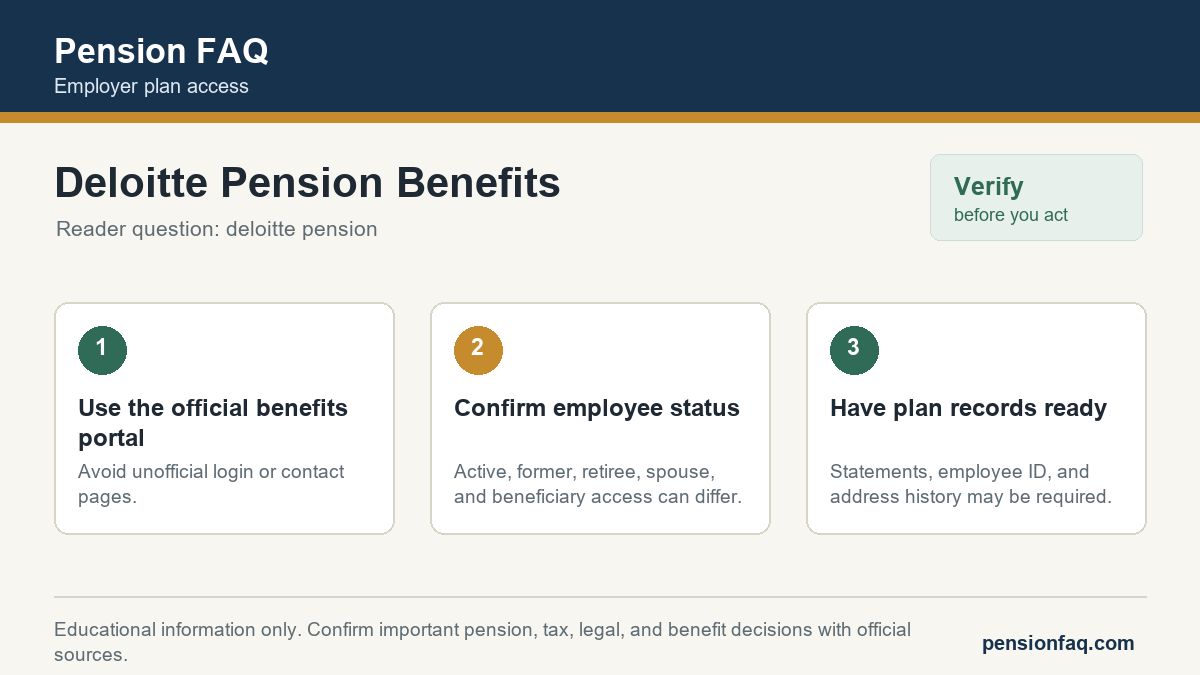
Use the sections below to understand Understanding Deloitte Pension Benefits in context, then confirm account access, forms, and benefit details through the official employer or plan administrator. This page is most relevant to readers searching for deloitte pension.
Eligibility Requirements for Pension Benefits
Eligibility requirements for pension benefits at Deloitte are determined by factors such as years of service, employment status, and age at retirement. Employees must meet a minimum threshold of service years to qualify for pension benefits. Additionally, those in full-time positions may have different eligibility criteria compared to part-time or contract employees. Age at retirement is also a critical factor, influencing the benefit amount and distribution options available. Overall, these criteria are designed to ensure a fair and equitable pension system for all eligible employees.
Types of Pension Plans Offered
Deloitte offers a variety of pension plans, including defined benefit and defined contribution options, tailored to meet the diverse needs of its employees. The defined benefit plan provides a guaranteed retirement income based on salary and years of service. In contrast, the defined contribution plan allows employees to contribute a portion of their salary, with potential employer matching contributions. Additionally, Deloitte may offer hybrid plans that combine features of both defined benefit and defined contribution models. These options ensure that employees can select a plan that aligns with their financial goals and retirement strategy.
Contribution Rates and Matching
Contribution rates and matching contributions play a crucial role in maximizing retirement savings and ensuring long-term financial security for employees. At Deloitte, the firm offers competitive contribution rates that encourage employees to actively participate in their pension plans. The matching contributions provided by Deloitte further enhance the growth potential of employees’ retirement savings. Employees are often advised to contribute at least enough to receive the full company match, as this represents an immediate return on their investment. By understanding and optimizing these contributions, employees can significantly bolster their financial future.
Vesting Schedule Explained
The vesting schedule outlines the timeline and conditions under which employees gain full ownership of their pension benefits. Typically, employees must work for a specified number of years before they can claim the full value of their contributions and employer matching. Different tiers of vesting may apply, such as immediate vesting or gradual vesting over several years. This schedule is crucial for employees to understand as it directly impacts their financial planning and retirement readiness. Ultimately, the vesting schedule serves to incentivize long-term employment and loyalty to the organization.
Withdrawal Options and Strategies
Withdrawal options and strategies play a crucial role in optimizing retirement income and ensuring financial stability during the transition from employment to retirement. Individuals must carefully evaluate their choices, including lump-sum distributions versus periodic withdrawals, to align with their financial goals. Additionally, considerations regarding the timing of withdrawals can significantly impact the longevity of retirement savings. A well-structured withdrawal strategy can help avoid common pitfalls, such as depleting funds too quickly or incurring unnecessary penalties. Understanding these aspects is essential, especially when considering the tax implications of pension benefits.
Tax Implications of Pension Benefits
Tax implications of pension benefits can significantly impact an individual’s retirement planning and overall financial strategy. Understanding the tax treatment of pension withdrawals is essential, as these distributions may be subject to income tax at the individual’s current tax rate. Additionally, early withdrawals may incur penalties, further affecting the net amount received. Tax-deferred growth within pension plans can provide advantages, but it necessitates careful consideration when planning withdrawals. Ultimately, strategic tax planning can enhance the effectiveness of pension benefits in achieving long-term financial goals.
Resources for Further Assistance
Additional resources for further assistance can provide valuable insights into navigating pension benefits effectively. Various online platforms, including government websites, offer detailed information about pension plans and eligibility requirements. Consulting with financial advisors or pension specialists can also enhance understanding and optimize benefit utilization. Additionally, joining employee resource groups or forums may facilitate knowledge sharing among colleagues regarding specific experiences with Deloitte’s pension offerings. Finally, leveraging printed materials such as brochures or handbooks can serve as a handy reference for employees seeking clarity on their pension options.
Frequently Asked Questions
How do deloitte’s pension benefits compare to those offered by other companies in the industry?
When assessing pension benefits across various companies in the industry, it is crucial to consider factors such as the vesting period, contribution matching, and the overall financial stability of the pension plan. Many organizations offer competitive retirement plans that may include defined benefit or defined contribution schemes, each with its unique advantages. A comparative analysis indicates that some companies may provide more generous matching contributions, while others may emphasize additional retirement savings options. Therefore, evaluating these aspects is essential for employees to make informed decisions about their long-term financial planning.
What factors should i consider when deciding whether to participate in a pension plan?
When deciding whether to participate in a pension plan, several factors warrant careful consideration. First, evaluate the plan’s benefits, including employer contributions, vesting schedules, and the potential for growth over time. Additionally, assess your personal financial situation, including your current savings, retirement goals, and other investment options available to you. Finally, consider the stability and reputation of the pension plan provider, as this can significantly impact the security of your retirement income.
Can i transfer my pension benefits if i leave deloitte for another employer?
When considering the transfer of pension benefits upon leaving an employer, it is essential to review the specific terms and conditions of the pension plan in question. Typically, many pension plans allow for the transfer of benefits to another qualified plan or an Individual Retirement Account (IRA), but this can vary significantly between organizations. Additionally, it is advisable to consult with a financial advisor or the plan administrator to understand any potential tax implications and the process involved in executing a transfer. Ultimately, ensuring that you make an informed decision can significantly impact your long-term financial well-being.
Conclusion
In summary, the pension benefits offered by Deloitte encompass a comprehensive framework designed to accommodate the varied needs of employees. Eligibility criteria, contribution structures, and vesting schedules collectively ensure that individuals can effectively plan for their financial futures. The array of pension plans available allows for tailored retirement strategies that align with personal circumstances and goals. Furthermore, understanding withdrawal options and associated tax implications is essential for maximizing the advantages of these benefits. Ultimately, a well-informed approach to pension planning can significantly enhance financial security in retirement.
If you’re looking to broaden your understanding of pension benefits, I highly recommend visiting the webpage on understanding the basics of Navy pensions. This resource provides valuable insights that can complement your knowledge of Deloitte’s pension offerings. You can find it here: navy pensions.

Michael Reynolds is a retirement benefits researcher and the lead author at Pension FAQ. With over 12 years of experience analyzing employer pension plans, state retirement systems, and Social Security policy, he specializes in translating complex pension rules into clear, actionable guidance for American workers and retirees.
Michael holds a Bachelor’s in Economics from the University of Michigan and has completed the Certified Retirement Counselor (CRC) program. His work has been cited by financial planners and HR professionals helping employees navigate their pension options.
At Pension FAQ, Michael leads a team covering employer plan access, state pension taxation, teacher and public employee retirement systems, professional sports pensions, and pension calculation rules. All content is rigorously reviewed against official plan documents and IRS guidelines.
Disclaimer: Pension FAQ content is for educational purposes only and does not constitute financial, tax, legal, or retirement benefits advice. Always consult your plan administrator or a qualified professional for decisions about your specific situation.