
Understanding Carers Allowance and Private Pensions
Quick Answer: Carers Allowance And Private Pension Income
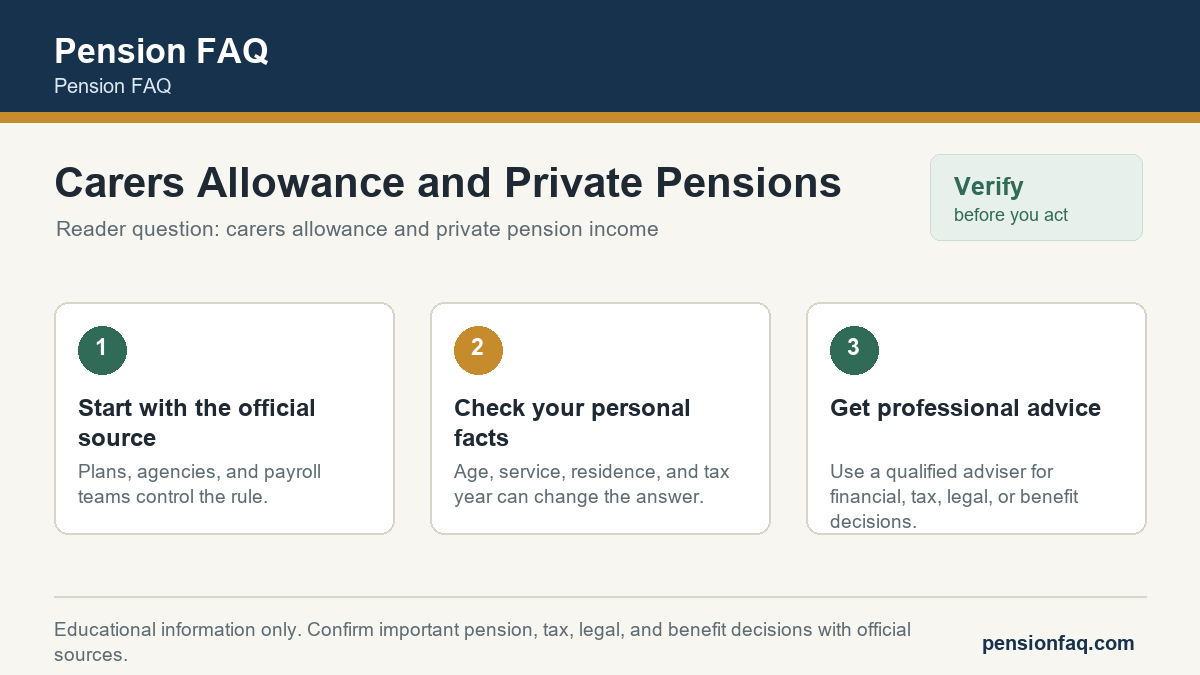
For carers allowance and private pension income, use this page as a plain-English starting point and confirm important decisions with the official plan, employer, government agency, payroll office, or qualified professional.
| Check first | Why it matters |
|---|---|
| Official source | Confirm the rule with the plan, employer, government agency, or payroll office. |
| Personal facts | Age, service history, tax year, and residence can change the answer. |
| Professional advice | Use a qualified professional for financial, tax, legal, or benefits decisions. |
Before you act: Confirm important details with official plan documents, employer benefits staff, government agencies, or a qualified professional before acting. For site standards and limits, see our Financial and Pension Disclaimer and Pension Methodology.
Use the sections below to review Understanding Carers Allowance And Private Pensions, then confirm important details with the official plan, agency, employer, payroll office, or qualified professional. This page is most relevant to readers searching for carers allowance and private pension income.
The Basics of Carers Allowance
Carers Allowance is a financial support designed for those who look after individuals with disabilities or severe health issues. It’s essential for carers to understand the eligibility criteria and the application process to access these benefits. Now, let’s delve into the key points surrounding the Carers Allowance.
Eligibility Criteria Overview
The eligibility criteria for Carers Allowance include specific requirements related to the care recipient’s disability and the caregiver’s financial situation. Carers must provide at least 35 hours of care per week to qualify. The care recipient needs to receive certain disability benefits to meet the criteria. Additionally, the caregiver’s earnings must fall below a specified threshold. It’s crucial for potential applicants to review these conditions thoroughly before applying.
Application Process Steps
Completing the application process for Carers Allowance involves several key steps that applicants need to follow carefully. First, they must gather all necessary documentation, including proof of care and financial information. Next, applicants should complete the application form accurately, ensuring all details are correct. After submission, it’s crucial to monitor the application status and respond promptly to any requests for additional information. Finally, once approved, they’ll receive notification regarding the payment schedule and amount.
Eligibility Criteria for Carers Allowance
To qualify for Carers Allowance, applicants must meet specific eligibility criteria. They’ve got to consider age and residency requirements, as well as an assessment of their care responsibilities. Additionally, income and savings limits play a crucial role in determining eligibility.
Age and Residency Requirements
Age and residency requirements can significantly affect whether someone qualifies for Carers Allowance. Applicants must be at least 16 years old to be eligible. They’ve also got to be a resident in the UK for a specific period. If someone doesn’t meet these age or residency conditions, they can’t receive the allowance. These criteria ensure that the support is targeted to those who truly need it.
Care Responsibilities Assessment
Care responsibilities assessment involves evaluating the amount of time spent providing necessary support to the individual in need. It’s crucial for determining whether the applicant meets the care requirements for Carers Allowance. This assessment typically focuses on the level of care provided and the needs of the person being supported. If the applicant’s care responsibilities are deemed significant, they may qualify for financial assistance. Ultimately, the assessment serves as a key component in the eligibility process for Carers Allowance.
Income and Savings Limits
Income and savings limits significantly impact whether individuals can receive Carers Allowance, as they must stay within the prescribed thresholds. They’ve got to ensure that their weekly income does not exceed a certain amount. Moreover, total savings must remain below a specified limit to remain eligible. If individuals surpass these financial thresholds, they won’t qualify for the allowance. These limits are designed to target support to those most in need.
How Carers Allowance is Calculated
Carers Allowance isn’t simply handed out; it’s calculated based on specific criteria. Factors like eligibility, calculation methodology, and the impact of income all play a vital role in determining the final amount. Understanding these components helps clarify how the allowance is derived.
Eligibility Criteria for Allowance
Eligibility criteria for the allowance include specific conditions that applicants must meet to qualify for support. Applicants must be at least 16 years old and provide care for someone who receives certain disability benefits. They can’t earn more than the set income threshold while caring for someone. The individual receiving care must require substantial support due to their condition. It’s important for applicants to ensure they meet all requirements to avoid delays in receiving the allowance.
Calculation Methodology Explained
The calculation methodology for Carers Allowance involves assessing the number of hours spent providing care and the needs of the individual being cared for. It considers the complexity of care required, which can vary significantly from one person to another. Additionally, the financial circumstances of the carer may influence the overall allowance. It’s essential for carers to document their hours accurately to ensure the right calculations. Ultimately, the process aims to reflect the true value of the care provided.
Impact of Income on Allowance
Income levels can significantly affect the amount of allowance one receives, as higher earnings may lead to reduced benefits. Those earning above a certain threshold often find their entitlement diminished. Conversely, individuals with lower income may qualify for the full amount. The way income is assessed plays a crucial role in the overall calculation. Consequently, understanding these income brackets is essential for potential recipients.
Impact of Carers Allowance on Private Pensions
Receiving Carers Allowance can affect how private pensions are calculated and received. It’s important to note that some pension schemes may consider Carers Allowance as part of an individual’s income. This could lead to a reduction in pension benefits, depending on the specific terms of the pension plan. Additionally, not all pension providers treat Carers Allowance the same way, which means outcomes can vary. When someone claims Carers Allowance, it might also impact their eligibility for certain pension credits. Therefore, individuals should review their pension arrangements carefully. Consulting a financial advisor may help clarify any potential effects on private pensions.
Understanding the Interaction between Benefits and Pensions
Many individuals often find it challenging to navigate the complexities of how benefits and pensions interact. They often assume that receiving benefits will not affect their pension plans, but that’s not always the case. Individuals may miss out on pension contributions if they rely solely on benefits for their income. It’s crucial for them to understand how different types of benefits can impact their overall pension entitlements. Many find themselves in a precarious situation when they don’t seek advice on this matter. They might be unaware of the potential overlap between their benefits and pension schemes. Ultimately, it’s essential for individuals to educate themselves on these interactions to make informed financial decisions.
Tax Implications of Carers Allowance and Private Pensions
Carers Allowance can affect the tax liabilities associated with private pensions, leading to potential financial implications for recipients. It’s important for individuals to understand how Carers Allowance interacts with their pension income. Recipients may find that their overall taxable income increases due to the allowance. This can push them into a higher tax bracket, resulting in higher tax payments. Additionally, some individuals might not realize that their Carers Allowance could impact tax relief on their private pension contributions. It’s essential for recipients to assess their financial situation regularly. Consulting with a tax advisor can help clarify any uncertainties regarding tax liabilities.
Maximizing Your Financial Support as a Carer
Maximizing financial support as a carer is crucial for ensuring a stable economic situation. By understanding various benefits and planning accordingly, they can enhance their financial support system. It’s essential to focus on key areas like eligibility criteria, combining benefits, and future planning for long-term security.
Assessing Your Eligibility Criteria
Understanding eligibility criteria is vital for ensuring that they’re accessing all possible financial support options available to them. Many carers may not realize that their circumstances directly impact their eligibility for benefits. It’s important for them to review both income and care responsibilities to determine if they qualify. They should also keep updated on any changes to regulations that could affect their status. By being proactive, they can secure the financial assistance they need.
Combining Benefits Effectively
Combining benefits effectively can help ensure that individuals receive the maximum financial support available to them. By understanding how carer’s allowance interacts with private pensions, one can create a more robust financial strategy. It’s important to explore all potential benefits that may complement each other, allowing for a more comprehensive support system. Many individuals overlook the impact of combining these benefits, which can lead to missed opportunities. Overall, strategic planning can significantly enhance financial stability for caregivers.
Planning for Future Needs
Planning for future needs requires careful consideration of potential changes in circumstances and the resources available. They should assess their long-term financial goals and how current benefits align with those objectives. It’s important for them to stay informed about policy changes that could impact their financial support. Additionally, they must evaluate the potential for increased care responsibilities and any associated costs. By taking these steps, they can better prepare for their future financial needs.
Planning for Retirement While Providing Care
Balancing retirement savings with caregiving responsibilities can be challenging for many individuals. They often struggle to find time to contribute to their private pensions while managing daily care tasks. Many caregivers feel overwhelmed, leading to a lack of focus on their long-term financial security. It’s crucial for them to assess their financial situation and explore available options. Some might consider reducing their working hours to balance both roles, but this can impact their pension contributions. Additionally, seeking support from local resources can provide them with much-needed relief. Ultimately, planning ahead can help caregivers secure their financial future while providing care.
Common Myths About Carers Allowance and Pensions
Many people hold misconceptions about how Carers Allowance interacts with pensions. It’s often thought that receiving a pension automatically disqualifies one from Carers Allowance eligibility. Additionally, some believe that Carers Allowance can significantly affect pension benefits, leading to confusion about financial planning.
Misconceptions About Carers Allowance
It’s common for individuals to mistakenly believe that Carers Allowance is only available to those who do not have any other sources of income. Many think that if someone receives a pension, they automatically lose their eligibility for the allowance. Some individuals are under the impression that Carers Allowance will negatively impact their pension benefits. There’s a widespread notion that the financial threshold for receiving the allowance is prohibitively low. These misconceptions can lead to confusion and misinformation regarding support for carers.
Pensions Impact on Carers Allowance
Pensions can have a nuanced effect on Carers Allowance eligibility, often leading to misunderstandings among recipients. Many recipients mistakenly believe that any pension income disqualifies them from receiving Carers Allowance. However, it’s important to note that only certain types of pensions may impact eligibility. Some individuals might be unaware that their pension could actually complement their Carers Allowance. Ultimately, clarity around these rules is essential for effective financial planning.
Resources for Carers Seeking Financial Guidance
Carers seeking financial guidance can find a variety of resources available through local support groups and online platforms. Many organizations offer workshops tailored to the specific needs of carers. Online forums provide a space for sharing experiences and advice on financial matters. Local councils often have dedicated advisers who can assist with navigating benefits and allowances. Websites of charities frequently feature guides and FAQs that clarify complex financial information. Networking events can connect carers with financial experts who understand their unique situations. Additionally, social media groups can serve as a valuable source of real-time support and information.
Frequently Asked Questions
How does carers allowance affect my eligibility for other social security benefits?
Carers Allowance might impact eligibility for other social security benefits, as it could be counted as income when assessing financial needs. This means that receiving Carers Allowance could potentially reduce the amount of other benefits a person can claim.
What steps can i take if my carers allowance application is denied?
If someone’s Carers Allowance application is denied, they can request a reconsideration of the decision or appeal it if they believe it was incorrectly assessed. It’s also wise for them to gather any additional evidence that supports their case to strengthen their chances of a successful outcome.
Are there any specific reporting requirements for carers receiving private pensions?
There are specific reporting requirements for individuals receiving private pensions, as they must inform the relevant authorities about any changes in their financial situation. Failure to report accurately could lead to penalties or affect their entitlement to benefits.
For those looking to deepen their understanding of the pension system, especially in the context of Michigan legislators, I highly recommend visiting this informative page: Understanding the Pension System for Michigan Legislators. It offers valuable insights that can enhance your knowledge of how pensions operate alongside benefits like Carers Allowance. Don’t miss the opportunity to expand your understanding!

Michael Reynolds is a retirement benefits researcher and the lead author at Pension FAQ. With over 12 years of experience analyzing employer pension plans, state retirement systems, and Social Security policy, he specializes in translating complex pension rules into clear, actionable guidance for American workers and retirees.
Michael holds a Bachelor’s in Economics from the University of Michigan and has completed the Certified Retirement Counselor (CRC) program. His work has been cited by financial planners and HR professionals helping employees navigate their pension options.
At Pension FAQ, Michael leads a team covering employer plan access, state pension taxation, teacher and public employee retirement systems, professional sports pensions, and pension calculation rules. All content is rigorously reviewed against official plan documents and IRS guidelines.
Disclaimer: Pension FAQ content is for educational purposes only and does not constitute financial, tax, legal, or retirement benefits advice. Always consult your plan administrator or a qualified professional for decisions about your specific situation.