
How Much Can an Aged Pensioner Earn in Australia?
Quick Answer: What Can A Person Earn Before Affecting Old Age Pension Payments
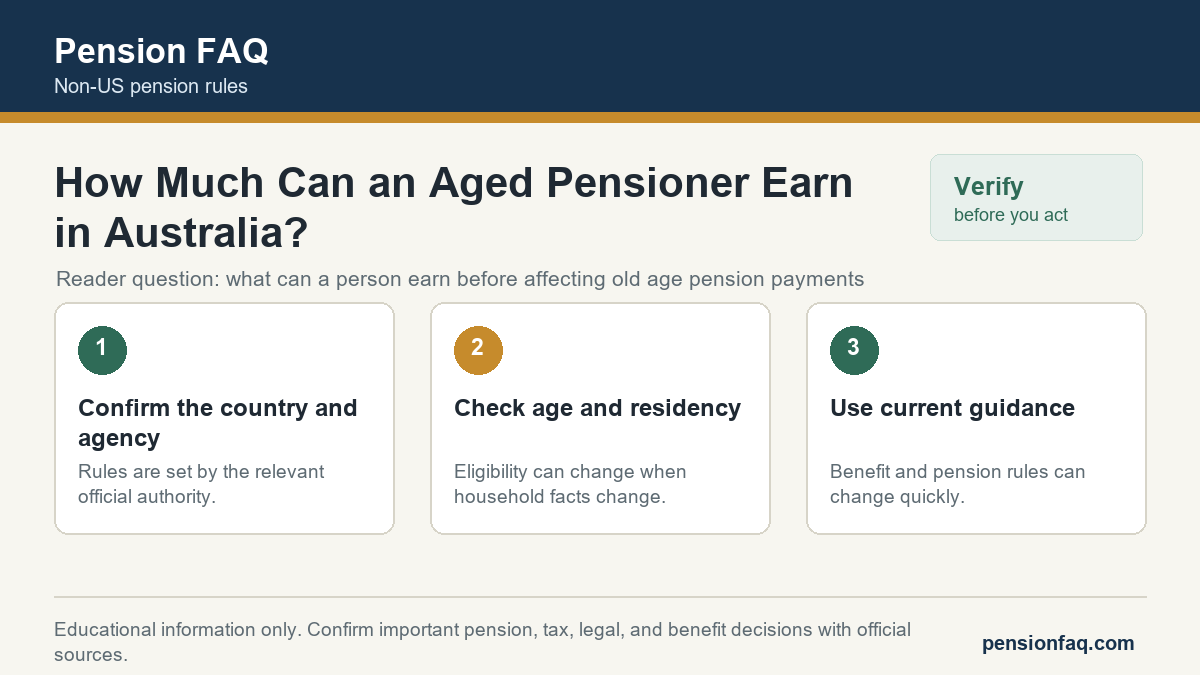
For what can a person earn before affecting old age pension payments, confirm the current rule with the official government or pension authority in the relevant country. Non-US pension and benefit rules often change by country, age, residency, and household circumstances.
| Check first | Why it matters |
|---|---|
| Country and agency | The correct rule depends on the official pension authority. |
| Residency and age | Benefit eligibility may change when you move or reach a pension age. |
| Current guidance | Use current official guidance before acting. |
Before you act: Because this is not a US-first pension topic, confirm the rule with the relevant country’s official pension or benefit authority before acting. For site standards and limits, see our Financial and Pension Disclaimer and Pension Methodology.
As I’ve navigated the world of pensions and income in Australia, I’ve often wondered how much can a single aged pensioner earn without affecting their benefits. Understanding the current income limits is crucial for anyone receiving the aged pension, as it directly influences financial stability. I’ve discovered that not all income is treated equally, and some earnings have different implications for pension payments. In this article, I’ll break down the various types of income considered for eligibility and explain the Work Bonus Scheme that can help many pensioners. By the end, I hope to provide clarity on maximizing income while staying within the limits set by the government.
Key Takeaways
Aged pensioners should be aware of current income limits to maintain eligibility for pension benefits, with approximately AUD 190 for singles and AUD 336 for couples per fortnight.
Various types of income, including earned, investment, and non-assessable income, must be accurately tracked to avoid penalties and ensure proper pension payment calculations.
The Work Bonus Scheme allows aged pensioners to earn up to $300 biweekly without affecting pension payments, highlighting the importance of understanding eligibility criteria.
Long-term financial planning, including retirement savings goals and budgeting, is essential for financial stability and navigating changes in income and expenses.
Current Income Limits for Aged Pensioners
I’m aware that the current income limits for aged pensioners in Australia can affect their eligibility for benefits. It’s important for me to keep track of these thresholds to avoid any surprises. I’ve seen how a slight increase in income can impact the amount of pension I receive. Knowing the limits helps me make informed decisions about work and finances. This brings me to consider how earnings impact pension payments and what that means for my overall financial situation.
How Earnings Impact Pension Payments
I’ve realized that my earnings can significantly influence my pension payments. It’s important for me to understand the specific income thresholds and how they affect what I receive. Knowing the allowable earnings guidelines helps me navigate potential reductions in my pension.
Income Thresholds for Pension
Understanding the income thresholds for my pension is crucial for planning my finances effectively. I’ve found that exceeding these thresholds can lead to reduced payments, which I need to avoid. Each year, I check the updated limits to ensure I’m within the guidelines. It’s a balancing act, trying to earn enough without jeopardizing my pension. Keeping track of my income helps me make informed decisions about my work and finances.
Impact of Work Income
Work income can complicate my financial planning, especially regarding the limits that might reduce my overall pension benefits. I often find myself weighing the pros and cons of taking on extra work. It’s tricky when my earnings push me over the income threshold, leading to a reduction in my pension. I need to keep track of how much I earn to avoid any unwanted surprises. Balancing work and pension income feels like a constant juggling act for me.
Allowable Earnings Guidelines
The allowable earnings guidelines seem crucial for ensuring my pension benefits remain intact. I’ve learned that exceeding these limits can lead to reductions in my payments. It’s reassuring to know that I can still earn a certain amount without jeopardizing my financial security. I often check the latest figures to stay informed about any changes. Understanding these guidelines gives me peace of mind as I plan my work and income.
Reductions in Pension Payments
Reductions in my pension payments can be a real concern if my earnings exceed certain limits. I’ve got to keep track of how much I make to avoid any surprises. It’s frustrating to think that a few extra dollars could impact my financial support. I often wonder how these reductions are calculated and what thresholds apply to my situation. This makes me curious about the types of income considered for eligibility.
Types of Income Considered for Eligibility
When I think about eligibility for aged pensions, I realize there are various types of income that play a role. It’s not just about my earned income; investment income sources matter too. Understanding these categories helps me see how they impact my overall pension eligibility.
Types of Earned Income
Types of earned income, like my part-time job or freelance gigs, significantly affect my pension eligibility. I’ve noticed that every dollar I make can impact the amount of pension I might receive. Balancing my work hours and income helps me stay within the limits. It’s essential for me to keep track of my earnings to avoid unexpected reductions in my pension payments. Now, I need to consider how investment income sources will further influence my financial situation.
Investment Income Sources
Investment income sources can significantly affect my eligibility for the pension I need. I’ve got to keep track of things like dividends from shares and interest from savings accounts. Rental income from properties I own also plays a crucial role in determining my financial situation. Additionally, any investment returns I receive can impact how much pension support I qualify for. It’s essential for me to understand these factors to manage my finances effectively.
Work Bonus Scheme Explained
I’m excited to dive into the Work Bonus Scheme, which can really benefit aged pensioners in Australia. It’s important to understand how this scheme operates and what it means for those looking to supplement their income. Let’s explore the key points that outline the eligibility criteria, calculations, and impact on pension payments.
Eligibility Criteria for Work Bonus
The eligibility criteria for the Work Bonus scheme are crucial for ensuring that I can take advantage of this opportunity to boost my income without affecting my pension. I’ve got to be an aged pensioner to qualify, which isn’t a problem for me. Additionally, I need to be working and earning some income, but there’s a cap on how much I can earn without it impacting my pension. I also have to meet residency requirements to participate in the scheme. Now that I’ve got the eligibility down, let’s move on to calculating the work bonus.
Calculating the Work Bonus
Calculating the Work Bonus can be straightforward once I understand how my income interacts with the pension. I’ve learned that the first $300 I earn each fortnight doesn’t count against my pension. Any income above that amount gets assessed, but the Work Bonus allows me to offset some of it. It’s crucial for me to keep track of my earnings to maximize the benefit. By understanding this process, I can better manage my finances while enjoying the benefits of the pension.
Impact on Pension Payments
Understanding how the Work Bonus affects pension payments has really opened my eyes to potential increases in my income. I didn’t realize that the extra earnings could lead to a higher overall financial situation. It’s reassuring to know that I can work and still enjoy the benefits of my pension. This scheme encourages me to take on more work without the fear of losing my financial support. Overall, it’s made me more optimistic about my financial future.
Assessable Income vs. Non-Assessable Income
Assessable income includes earnings from work, while non-assessable income can be things like certain government payments that don’t count against my pension. I’ve got to keep track of both types to understand how they affect my financial situation. It’s important for me to know which income sources are assessable to avoid any surprises. I often find myself balancing my earnings to stay within limits that allow me to maximize my pension benefits. Now, let’s look at some strategies for maximizing income.
Strategies for Maximizing Income
Finding ways to maximize my income often includes exploring part-time work and investment opportunities. I’ve found that taking on freelance projects allows me to utilize my skills while earning extra cash. I also consider diversifying my investments to create multiple income streams. Networking with others can lead to unexpected job opportunities and collaborations. Lastly, staying informed about government incentives helps me make the most of my financial situation.
Reporting Income: What You Need to Know
When it comes to reporting income, I’ve learned that it’s crucial to understand the specific requirements involved. I know that my earnings can significantly impact my pension payments, so I need to stay informed. With that in mind, let’s dive into the key points I should consider.
Understanding Income Reporting Requirements
I’ve discovered that knowing the specific income reporting requirements can help me avoid potential penalties. I’ve realized that I need to report my income accurately and on time to ensure compliance. It’s essential for me to keep detailed records of my earnings throughout the year. I also understand that different types of income may have varying reporting obligations. Now, I’m curious about how my reported income will impact my pension payments.
Impact on Pension Payments
The impact on pension payments from my reported income is something that’s been on my mind lately. I’ve realized that even a small increase in my earnings can lead to a reduction in my benefits. It’s frustrating to think that my hard work might affect my financial support. I often weigh the pros and cons of taking on additional work. Staying informed about the thresholds is essential for me to make the right decisions.
Implications of Exceeding Income Limits
When I exceed the income limits, I need to consider how it affects my pension benefits. It also makes me think about the taxation implications and the employment opportunities available to me. Finally, I have to reflect on how this plays into my long-term financial planning.
Impact on Pension Benefits
Exceeding the income limits can seriously reduce my pension benefits, which worries me about my financial security. I’ve noticed that even a small increase in my earnings can lead to a significant cut in my payments. It makes me anxious to think about how my choices could impact my monthly budget. I can’t afford to lose any support, especially as I plan for retirement. Balancing work and my pension feels like walking a tightrope sometimes.
Taxation Considerations
Taxation considerations can really complicate my financial situation if I earn too much. I’ve got to keep an eye on how my extra income impacts my tax bracket. It’s frustrating knowing that more earnings could lead to less take-home pay after taxes. I often wonder if the benefits of working outweigh the potential tax drawbacks. Balancing my income and tax obligations is a constant challenge I face.
Employment Opportunities Available
Exploring new employment opportunities is crucial for me as I navigate my financial situation. I’ve been looking into part-time work that fits my skills and interests. There are various roles available, from retail to freelance gigs, that can supplement my income. I’ve also considered volunteering as a way to gain experience while keeping my options open. Ultimately, I want to find a balance that supports my financial needs without jeopardizing my pension benefits.
Long-Term Financial Planning
Long-term financial planning’s something I really need to focus on to secure my future. I’ve got to set clear goals for my retirement savings. I should consider different investment options that align with my risk tolerance. It’s important for me to regularly review my financial situation and adjust my plans accordingly. By staying proactive, I can better navigate any changes in my income or expenses.
Government Support Programs for Seniors
When it comes to government support programs for seniors, I know there’s a lot to navigate. It’s crucial to understand the benefits available and how they can help with financial stability. Now, let’s dive into the specifics of these programs and what they offer.
Government Pension Benefits Overview
I’ve found that government pension benefits can provide essential income for retirees, helping to ease financial burdens. These benefits often cover basic living expenses, giving seniors some peace of mind. I appreciate how they’re designed to support those with limited resources, ensuring a basic standard of living. Additionally, the eligibility criteria can be straightforward, making it easier for many to access this assistance. Now, let’s explore some additional financial assistance options that can further enhance retirees’ financial security.
Additional Financial Assistance Options
Additional financial assistance options can really make a difference in managing expenses, especially for those of us on fixed incomes. I’ve found that exploring local community programs can lead to unexpected support. Sometimes, there’re grants available for home modifications or healthcare costs. I’ve also looked into tax concessions that can ease my financial burden. These options remind me that I’m not alone in this journey and help me feel more secure.
Eligibility Criteria for Support
Understanding the eligibility criteria for support programs is essential for ensuring seniors can access the benefits they need. I’ve found that income and asset tests play a significant role in determining eligibility. It’s important to keep track of any changes in my financial situation that could impact my access to these supports. Additionally, age and residency requirements are also key factors I need to consider. With this knowledge in hand, I can better focus on planning for retirement income security.
Planning for Retirement Income Security
As I think about my retirement income security, I realize it’s crucial to have a solid plan in place. I want to ensure that I’m making the most of my resources and benefits. That’s why I’m focusing on strategies for income stability and maximizing my pension benefits.
Strategies for Income Stability
Strategies for income stability are essential to ensure that my financial needs are met throughout retirement. I’ve been looking into diversifying my income sources to reduce reliance on a single stream. I’m also considering part-time work or flexible gig opportunities to supplement my pension. Additionally, I’m exploring investment options that align with my risk tolerance. By taking these steps, I hope to maintain a comfortable lifestyle as I age.
Maximizing Pension Benefits
Maximizing my pension benefits requires careful consideration of my options and timing. I’ve been researching the best ways to increase my pension income without jeopardizing my eligibility. It’s important for me to understand how part-time work or investments can impact my benefits. I’m also looking into the possibility of deferring my pension payments for a higher return later. Ultimately, I want to make informed decisions that will secure my financial future.
Frequently Asked Questions
What are the eligibility criteria for receiving the aged pension in australia?
To be eligible for the aged pension in Australia, I need to meet certain criteria. First, I must be at least 66 years old, as this is the current age requirement. Additionally, I have to be an Australian resident and have lived here for a certain period. Finally, my income and assets must fall within specific limits, which the government sets.
How does the aged pension affect other government benefits or allowances?
When I think about how the aged pension affects other government benefits or allowances, I realize it can be quite complex. For instance, receiving the aged pension might reduce the amount I can get from other supports, like rental assistance or healthcare benefits. It’s important for me to understand the rules around income and assets, as they can influence my overall financial situation. I always make sure to check with the relevant agencies to see how my pension interacts with other benefits I might be eligible for.
What resources are available for aged pensioners seeking employment?
When I’m looking for resources as an aged pensioner seeking employment, I often find that there are several helpful options available. Local job centers and community organizations usually offer tailored programs and workshops that cater specifically to seniors. I’ve also discovered online platforms dedicated to connecting older workers with employers who value their experience. Additionally, networking with other pensioners can lead to job opportunities that might not be advertised widely.
If you’re looking to deepen your understanding of financial limits for single pensioners in Australia, I highly recommend visiting this informative page: Understanding the Financial Limits for a Single Pensioner. It offers valuable insights that complement the topic of aged pensions, helping you navigate the complexities of earning allowances. Don’t miss out on this essential resource!

Michael Reynolds is a retirement benefits researcher and the lead author at Pension FAQ. With over 12 years of experience analyzing employer pension plans, state retirement systems, and Social Security policy, he specializes in translating complex pension rules into clear, actionable guidance for American workers and retirees.
Michael holds a Bachelor’s in Economics from the University of Michigan and has completed the Certified Retirement Counselor (CRC) program. His work has been cited by financial planners and HR professionals helping employees navigate their pension options.
At Pension FAQ, Michael leads a team covering employer plan access, state pension taxation, teacher and public employee retirement systems, professional sports pensions, and pension calculation rules. All content is rigorously reviewed against official plan documents and IRS guidelines.
Disclaimer: Pension FAQ content is for educational purposes only and does not constitute financial, tax, legal, or retirement benefits advice. Always consult your plan administrator or a qualified professional for decisions about your specific situation.